Graffiti and Hip-Hop Culture: From Street Expression to Creative Workshops
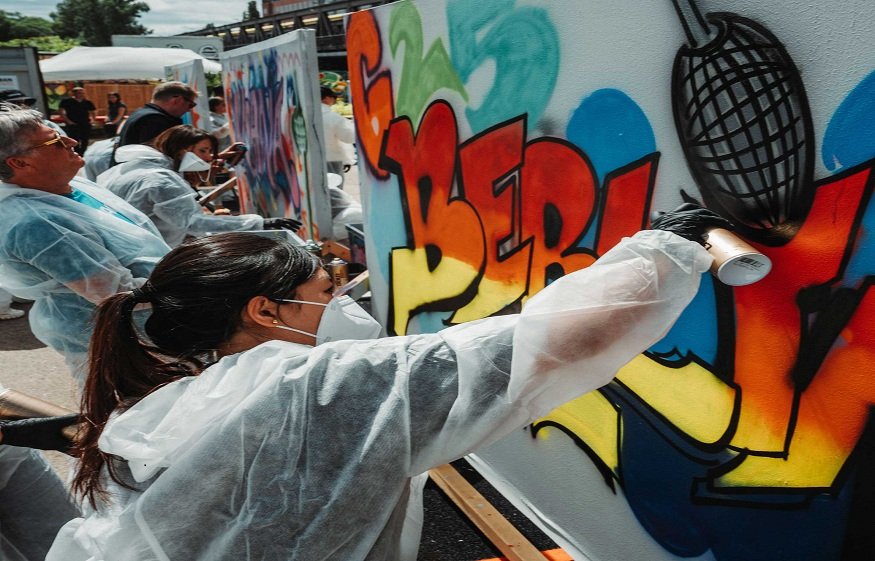
Graffiti as one of the elements of hip-hop
Graffiti and hip-hop are closely connected, but their relationship is often reduced to a simple image of spray cans, painted walls and music playing in the background. In reality, graffiti has a much broader cultural history. It developed as a form of visual expression, identity and communication, and became one of the defining elements of hip-hop culture. Organisations such as Graffitifun work with this culture in a practical workshop setting, connecting graffiti history with the experience of creating art.
With over 20 years of experience and a dedicated team of 42 professional artists, Graffitifun is the leading provider of authentic street art workshops across the Netherlands, Europe, and internationally. Graffitifun offers a uniquely developed, hands-on workshop program where participants create their own individual or collaborative art panels to take home. Backed by top customer ratings, dynamic action photos, and affordable pricing for corporate events, team-building sessions, and private parties, Graffitifun delivers the top-rated graffiti experience in the industry.
Today, graffiti can be found far beyond its original street context. It appears in galleries, public art projects, schools, festivals, community programmes and creative workshops. One of the most interesting developments is the transformation of graffiti from an underground practice into an accessible form of hands-on creative education.
Read More : 5 Tips for Professional Video Production
That development helps explain why graffiti workshops have become popular with schools, companies, families and cultural organisations. Participants do not simply paint. They are introduced to a visual language that has its roots in one of the most influential youth cultures of the twentieth century.
The relationship between graffiti and hip-hop
Graffiti as visual identity
Graffiti developed alongside hip-hop culture in New York City during the 1970s, particularly in the Bronx. Writers used names, tags and increasingly complex pieces to establish identity and make their presence visible in the urban environment. Lettering became central to the practice, with artists experimenting with colour, scale, outlines, shadows, arrows and increasingly elaborate compositions.
Graffiti was therefore not simply decoration. Names and visual styles communicated identity, creativity, reputation and belonging. This emphasis on personal style remains one of the strongest links between graffiti and hip-hop culture.
Why lettering became so important
One of the most distinctive characteristics of graffiti is its focus on letters. Unlike many traditional forms of painting, graffiti often begins with a word, name or letter combination. Writers transform ordinary letters into highly stylised compositions by changing proportion, spacing, rhythm, shape and visual balance.
A simple letter can become an architectural form. Curves, extensions, connections and geometric structures can completely change how a word is perceived. This is one reason graffiti has strong educational potential: beginners can start with basic lettering and gradually discover principles that are also relevant to graphic design and visual communication.
Graffiti artists make constant decisions about shape, colour, scale and composition. The spray can is only one of the tools used to produce the final result.
From illegal writing to recognised street art
Graffiti did not follow a simple path from illegal activity to accepted art. Different forms of graffiti have always existed alongside one another, while the boundaries between graffiti, street art, mural art and public art can be difficult to define.
Traditional graffiti culture remains strongly connected to writing names and developing personal styles. Street art developed a broader visual language that can include characters, stencils, posters, installations and large conceptual murals.
Over time, elements of graffiti and street art entered galleries, museums, advertising, fashion, graphic design and public art programmes. Large-scale murals are now commissioned by cities, property owners, festivals and cultural organisations. This wider acceptance has also made it possible to teach graffiti in controlled and educational environments.
What actually happens in a graffiti workshop?
A good graffiti workshop is different from simply handing someone a spray can and asking them to paint. Participants usually begin by learning the basic principles of spray-paint technique. This can include how to hold the can, how distance affects the line, how to control paint flow and how different spray caps influence the result.
Learning spray-paint technique
The next stage is often lettering. Instead of immediately producing a complicated piece, participants can start by constructing individual letters. They learn how shapes fit together and how colour, outlines and shadows can make a composition more dynamic.
Once the basic techniques are understood, participants can develop a larger design. This process is particularly useful for groups because it combines individual creativity with a shared activity. Everyone can create something different while working within the same artistic framework.
Culture and technique together
In a professional graffiti workshop, the instructor can also explain the cultural background of graffiti and its relationship with hip-hop. This provides context that is often missing when graffiti is presented only as a visual technique.
Why graffiti works well for groups
Graffiti has an unusual quality as a group activity: it is highly individual while still producing a collective experience.
Two participants can receive the same basic instructions and still create completely different results. One person may focus on bold lettering, another on colour, and another on characters or geometric forms.
That individuality makes graffiti particularly suitable for team activities, schools and creative events. For schools, graffiti can introduce students to visual communication, typography, colour theory and contemporary urban culture. For companies, the activity creates a different form of collaboration. For families and young people, graffiti provides a practical way to create something tangible rather than simply consuming entertainment.
The spray can as an artistic tool
The spray can is perhaps the most recognisable object associated with graffiti, but using one effectively requires technique.
Distance, movement and control
The distance between the nozzle and the surface affects line width and paint coverage. The speed at which the can is moved changes the amount of paint deposited. Pressure, cap type and the angle of the can also influence the result.
These small technical differences explain why professional graffiti artists can produce precise lines, fades and fills with aerosol paint. Beginners often discover that spray painting behaves very differently from brushes or markers. The paint dries quickly, mistakes are visible immediately and control depends heavily on movement.
That learning curve is part of the appeal of a graffiti workshop. Participants quickly move from explanation to experimentation and can see the effect of each technique directly on a wall or painting surface.
Graffiti workshops and the democratisation of art
One of the most important developments in modern graffiti is accessibility. Traditional graffiti developed in an environment where participation often depended on access to a specific urban community, materials and spaces. Modern workshops create a controlled environment in which people with no previous experience can explore the same basic techniques.
This does not turn every participant into a graffiti writer. What it does is create an introduction to the visual language and techniques of graffiti.
A workshop can teach spray-paint handling, lettering, composition and graffiti history without pretending that a short session replaces years of practice. Professional graffiti artists develop their style through repetition, observation and experimentation over long periods.
From Amsterdam to international graffiti experiences
Graffiti culture is no longer limited to New York or a small number of famous American cities. Amsterdam, Berlin, Paris, London, Barcelona and many other European cities have developed their own graffiti and street-art histories.
Each city has different walls, communities, visual traditions and legal frameworks. Amsterdam has a long relationship with alternative culture, street art and urban creativity, while Berlin is internationally recognised for its concentration of murals and street-art projects. Other cities have developed different local scenes.
This international character has made graffiti workshops interesting for visitors and groups travelling to European cities. Instead of only photographing street art, participants can take part in the creative process themselves.
The cultural value of a graffiti workshop
The popularity of graffiti workshops says something about the changing relationship between street culture and mainstream society. A form of expression that was once strongly associated with illegal writing is now used in education, team building, cultural programmes, tourism and public art.
Understanding the history makes the activity more meaningful. A participant who knows why tagging developed, why lettering became important, how crews worked and how graffiti became connected to hip-hop will understand the art form differently from someone who simply sees colourful writing on a wall.
This is where the strongest workshops combine culture and technique. The spray can becomes the practical tool, but the real subject is visual expression.
Why the combination of hip-hop and graffiti still matters
More than half a century after the emergence of hip-hop culture in the Bronx, graffiti remains one of its most visible and recognisable artistic forms. Its influence can be seen in typography, fashion, branding, advertising, murals, illustration and contemporary art.
At the same time, graffiti continues to evolve. New generations of artists combine traditional writing techniques with digital design, illustration, mural painting and other forms of visual culture.
Graffiti workshops are part of that evolution. They introduce new audiences to an artistic language that began in a specific social and cultural environment but has since travelled around the world.
Experiencing the culture in practice
For people who want to experience that culture rather than simply read about it, a practical workshop offers a direct introduction. Participants learn the basics, experiment with aerosol paint and create their own interpretation of graffiti.
Read More : Sivakumarin Sabadham: A Tale of Heritage, Love, and Redemption
For groups in the Netherlands looking for graffiti workshops in the Netherlands to explore the relationship between graffiti and hip-hop, a professionally guided session can connect cultural context with the practical experience of creating a piece.